
Quick answer: every Phoria batch is built around third-party lab testing, batch documentation, and COA access. We test for the quality signals that matter in kratom: alkaloid potency, 7-hydroxymitragynine, heavy metals, microbial safety, product identity, and product-specific concerns like residual solvents for extracts.
Lab testing is not a marketing extra in the kratom industry. It is one of the clearest ways to separate a serious kratom company from a risky one. High-quality kratom brands publish or provide batch-level Certificates of Analysis, use independent labs, track lot numbers, and explain what the testing means in plain language. This page explains how Phoria Kratom approaches lab testing, what we test for, how to read a COA, and what customers should expect from a premium kratom company.
Important: Kratom products have not been evaluated by the FDA and are not intended to diagnose, treat, cure, or prevent any disease. Lab testing helps verify product quality, but it does not make kratom risk-free. Talk with a qualified healthcare professional before using kratom, especially if you are pregnant, nursing, taking medication, managing a medical condition, or using alcohol or other substances.
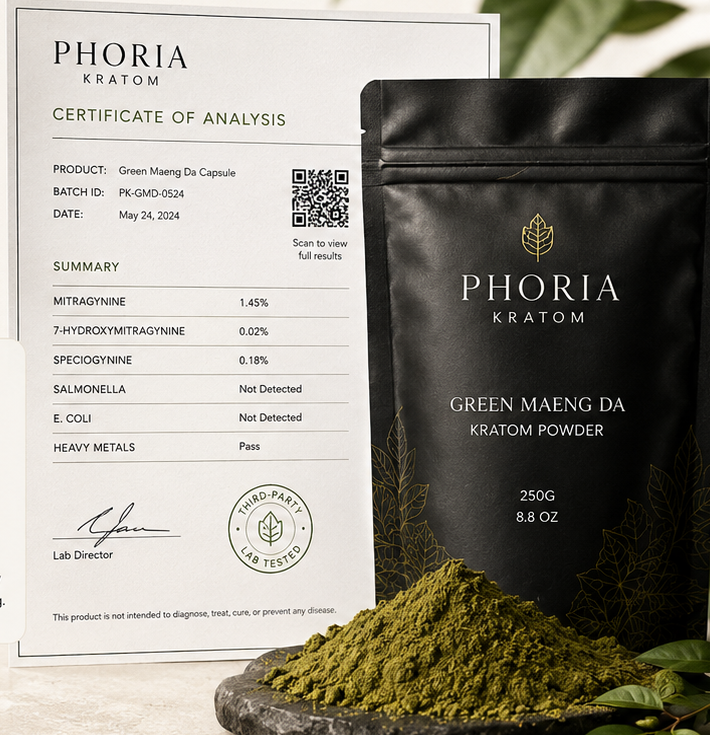
What Lab Testing Means For Kratom
Kratom is made from Mitragyna speciosa leaf, and botanical products can vary from batch to batch. Soil conditions, harvest timing, drying methods, transportation, storage, grinding, encapsulation, extraction, and packaging can all affect the finished product. Lab testing gives customers a way to look beyond the product name and verify the batch.
For kratom, a strong lab-testing program usually includes independent third-party labs, batch or lot numbers, Certificates of Analysis, contaminant screens, alkaloid testing, and a hold-and-release process before products are sold. This is the standard customers now expect from responsible kratom companies, including the leading brands we reviewed while planning this page.
Phoria's position is simple: product quality should be traceable. If you are comparing kratom capsules, kratom powder, kratom extracts, or best-selling kratom products, the lab information matters as much as the strain name or format.
What High-Quality Kratom Companies Test For
After reviewing public lab-testing and COA practices from established kratom companies, the same core themes appear repeatedly: independent testing, batch traceability, alkaloid potency, heavy metals, microbial safety, and extra product-specific checks. Those categories are the baseline for a serious kratom brand.
| Test category | What it checks | Why it matters |
|---|---|---|
| Alkaloid potency | Mitragynine, 7-hydroxymitragynine, and sometimes additional kratom alkaloids. | Helps verify product consistency and flags unusually concentrated or non-standard products. |
| Heavy metals | Lead, arsenic, cadmium, mercury, and related elemental contaminants. | Botanicals can absorb metals from soil, water, or processing environments. |
| Microbial safety | Salmonella, E. coli, coliforms, total aerobic plate count, yeast, and mold. | Plant material must be screened for pathogens and hygiene indicators before release. |
| Pesticides and agricultural residues | Pesticide or herbicide residues, depending on source material and supplier risk. | Responsible sourcing should include residue review when supply chain or product type calls for it. |
| Residual solvents | Solvents that may be used in extraction or concentration processes. | Especially important for extracts, enhanced products, and other concentrated formats. |
| Adulterants and identity | Product identity, synthetic or undeclared compounds, and label consistency. | Helps confirm the product is what the label says it is and is not intentionally adulterated. |
| Batch documentation | Batch number, product name, test date, lab report, and release record. | Lets customers connect the product in their hand to a specific COA. |
Quality benchmark
A strain name is not proof of quality.
Use lab testing, COA access, and batch records to verify kratom products before you compare by red, green, white, or regional names.
What Phoria Kratom Tests For
Phoria Kratom's testing program is designed around purity, potency, and safety. The exact panel can vary by product type, but our standard quality framework includes the categories below.
- Alkaloid potency: We test for mitragynine and monitor 7-hydroxymitragynine so product strength and alkaloid information can be reviewed at the batch level.
- 7-hydroxymitragynine review: 7-OH is monitored because concentrated or non-standard levels require careful quality review and responsible labeling.
- Heavy metals: We screen for metals commonly reviewed in botanical products, including lead, arsenic, cadmium, and mercury.
- Microbial safety: We test for pathogens and hygiene indicators such as Salmonella, E. coli, coliforms, total aerobic plate count, yeast, and mold.
- Product identity: Batch records, product naming, and COA information help confirm that the tested material matches the finished product.
- Residual solvents when applicable: Extract and concentrated formats may require residual solvent testing based on how the product is made.
- Pesticide, adulterant, or expanded panels when needed: Additional testing may be used when supplier review, product type, or quality risk calls for it.
For shoppers, the takeaway is straightforward: Phoria products are not released on product claims alone. We use batch testing and quality documentation to support the products we sell.
How To Read A Kratom COA
A COA should be readable, batch-specific, and tied to a real product. When you review a kratom lab result, look for these details first:
- Product name: The COA should match the product you bought, such as a capsule, powder, extract, gummy, or tablet.
- Batch or lot number: The number on the packaging should match the report or batch lookup record.
- Testing date: The report should show when the lab analyzed the sample.
- Lab information: Third-party lab name, report number, and method references are stronger than vague claims.
- Alkaloid results: Look for mitragynine and 7-hydroxymitragynine values when provided.
- Contaminant results: Review heavy metals, microbial panels, and any additional product-specific tests.
- Pass/fail language: Some COAs show clear pass/fail status. Others list numerical results that should be interpreted against the relevant standard or limit.
If a vendor says "lab tested" but does not connect that claim to a batch, report, product, or customer-accessible documentation, the claim is incomplete. That is why batch transparency and COA access are central to Phoria's quality standard.
From Source To Shelf: The Phoria Quality Process
Testing is strongest when it is part of a larger quality system. Phoria's process is built to support traceability at multiple points, not just after a product is packaged.
- Supplier review: We prioritize trusted sourcing relationships and product consistency before material reaches production.
- Batch tracking: Finished products are organized by batch so testing documentation can be tied to real inventory.
- Third-party lab testing: Independent testing supports product purity, potency, and safety review.
- Quality release: Lab information and product records are reviewed before products move into the customer experience.
- Customer access: Customers can use batch lookup, lab results, product pages, or support to locate available COA information.
What Lab Testing Can And Cannot Prove
Lab testing is one of the best quality tools available to kratom customers, but it is not a medical guarantee. A passing COA can help verify that a product met specific quality checks at the time of testing. It cannot prove that kratom is right for every person, that side effects will not occur, or that the product can be combined safely with medication, alcohol, or other substances.
Public-health agencies have reported concerns around kratom, including adverse events, dependence, withdrawal, contamination, heavy metals, Salmonella, and highly concentrated or synthetic 7-OH products. Responsible kratom companies should acknowledge those concerns directly instead of pretending lab testing removes every risk.
Use lab testing as one decision point alongside your local laws, product format, sensitivity, health history, and professional medical guidance. Do not use kratom while pregnant or nursing. Keep all kratom products away from children and pets.
Lab Testing Resources
Use these Phoria pages to review quality information and shop with clearer expectations.
Lab Results
Review available Certificate of Analysis information and product testing documentation.
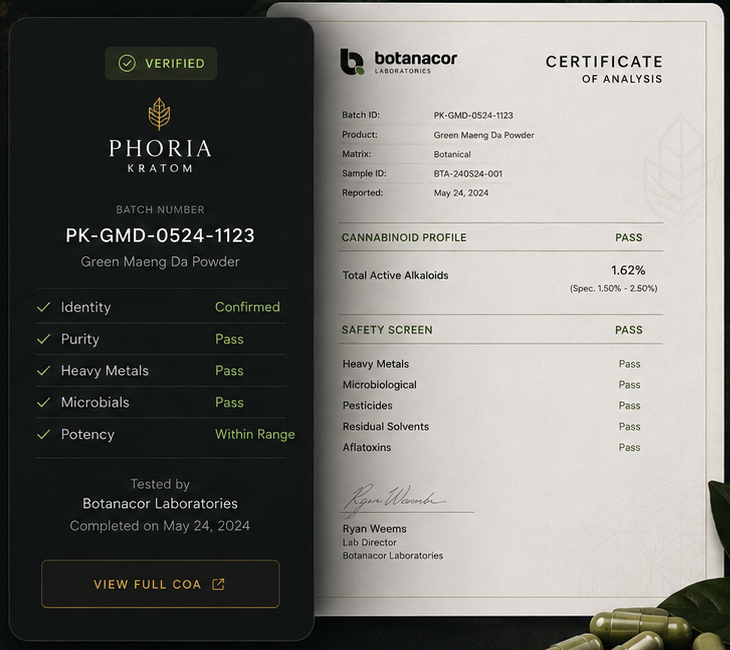 Batch Lookup
Connect a product batch number to available quality records and COA details.
Quality Standards
Learn how sourcing, testing, batch records, and responsible product pages work together.
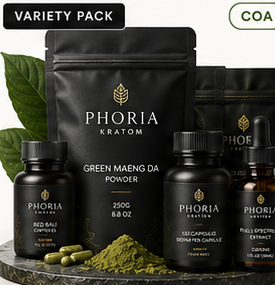 Best Sellers
Shop popular Phoria products backed by batch-level testing and transparency.
Research And Industry Benchmark Sources
This page was informed by public health resources from the FDA, FDA heavy-metal guidance for foods and supplements, the American Kratom Association's GMP Standards Program, and public lab-testing disclosures from established kratom companies. Competitor review was used to identify normal quality benchmarks: batch COAs, independent labs, alkaloids, heavy metals, microbial panels, and product-specific testing.
Lab Testing FAQs
What does Phoria Kratom test for?
Phoria Kratom tests batches for purity, potency, and safety. Standard panels include alkaloid potency, 7-hydroxymitragynine monitoring, heavy metals, microbial safety, product identity, and batch documentation. Extract and concentrated products may require additional panels such as residual solvents.
What is a kratom Certificate of Analysis?
A Certificate of Analysis, or COA, is a lab report tied to a product batch. It shows the product name, batch or lot number, testing date, lab information, analytes tested, results, and pass or fail status where applicable.
Why does batch testing matter for kratom?
Kratom is a botanical ingredient, and natural plant material can vary by harvest, supplier, processing, and storage. Batch testing helps verify the specific lot that reaches customers rather than relying only on a general product claim.
Which heavy metals are normally checked in kratom?
High-quality kratom testing commonly checks for lead, arsenic, cadmium, and mercury. These contaminants can occur in agricultural products through soil, water, equipment, or processing conditions.
Which microbes are normally checked in kratom?
Common kratom microbial testing includes Salmonella, E. coli, coliforms, total aerobic plate count, total yeast and mold, and related pathogen or hygiene indicators depending on the lab panel.
Do kratom companies test for mitragynine and 7-OH?
Responsible kratom companies commonly test for mitragynine and 7-hydroxymitragynine. Potency data helps verify label consistency and helps identify products that require additional review.
Are kratom extracts tested differently than powder or capsules?
Yes. Plain leaf powder and capsules are usually tested for alkaloids, microbes, and heavy metals. Extracts and concentrated products may also require residual solvent testing and closer review of potency and 7-OH levels.
Does lab testing mean kratom is risk-free?
No. Lab testing is an important quality-control step, but it does not make kratom risk-free or appropriate for every adult. Kratom may cause side effects, dependence, withdrawal, and interactions with medications or other substances.
Final Thoughts
Lab testing is not the only thing that defines a high-quality kratom company, but it is one of the clearest signals. Look for batch-level COAs, third-party labs, alkaloid testing, heavy-metal screening, microbial panels, and product-specific checks for extracts or concentrated formats. Phoria Kratom uses those standards to support transparent, batch-tracked products for responsible adult shoppers.
Ready to review the next step? Visit Phoria lab results, use batch lookup, or shop best-selling Phoria kratom products.