
Quick answer: kratom strain names are useful shopping labels, but they are not guaranteed effect categories. Red, green, and white kratom can help you compare products, yet the strongest decision signals are batch transparency, lab testing, format, responsible labeling, and how a specific product is made.
If you have searched for the best kratom strain, you have probably seen confident claims about red vein, green vein, white vein, Maeng Da, Bali, Borneo, Malay, Thai, and Indo products. Some of those names are helpful. Some are mostly market language. This guide explains the real difference between kratom strains, what current research supports, what remains uncertain, and how to compare Phoria products without relying on hype.
Important: Kratom products have not been evaluated by the FDA and are not intended to diagnose, treat, cure, or prevent any disease. This article is educational only. Talk with a qualified healthcare professional before using kratom, especially if you are pregnant, nursing, taking medication, managing a medical condition, or using alcohol or other substances.
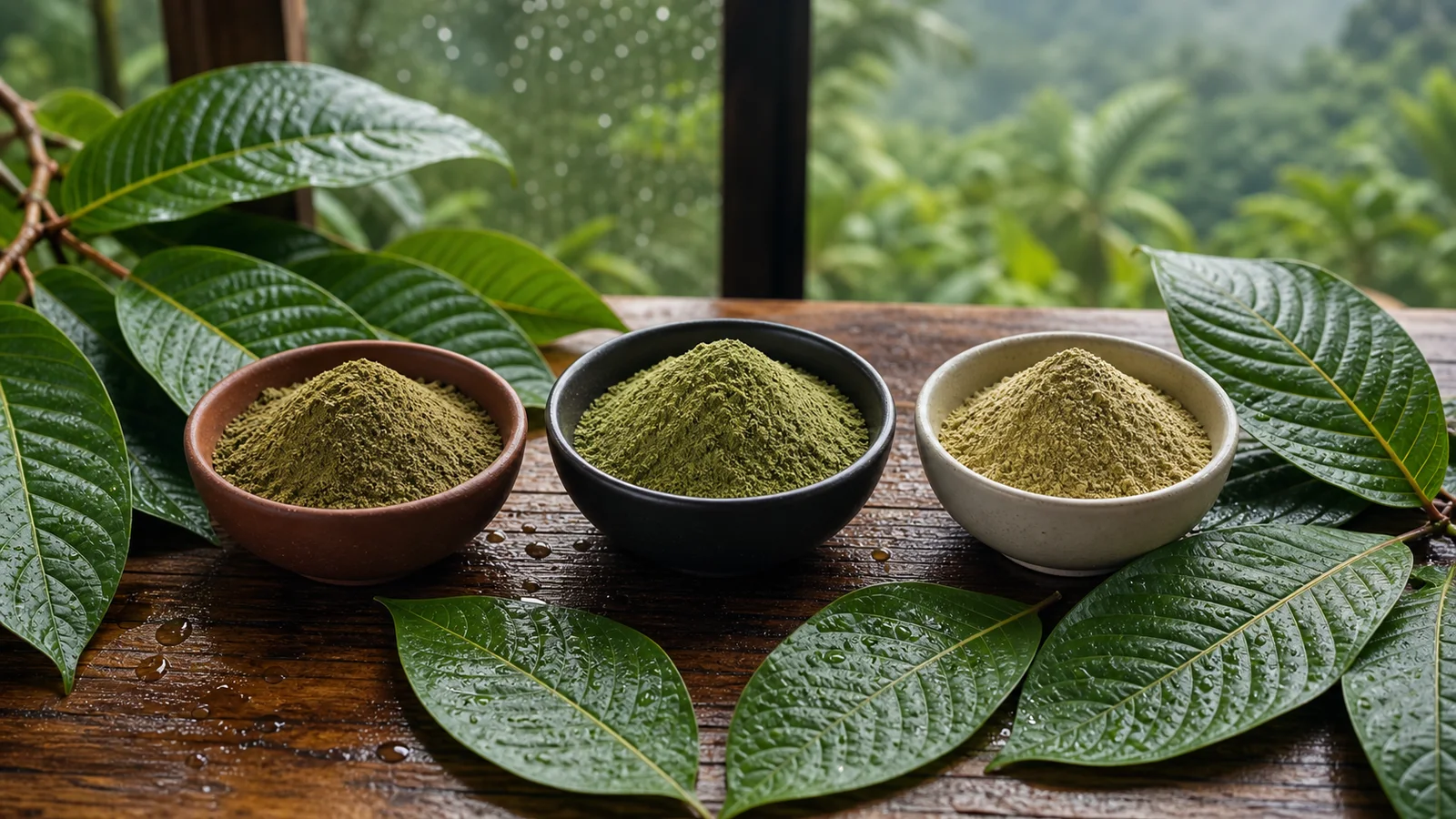
What Is A Kratom Strain?
A kratom strain is a product label used to separate one kratom option from another. In Western kratom shopping, strain names usually combine one or more of these ideas:
- Vein or color category: red vein kratom, green vein kratom, and white vein kratom.
- Regional or source-style name: Bali, Borneo, Malay, Thai, Indo, Vietnam, Sumatra, or similar terms.
- Product family or supplier selection: Maeng Da, Dragon, Platinum, Gold, enhanced blends, or house blends.
- Finished format: The strain may be sold as kratom powder, kratom capsules, or another prepared format.
The key point is that "strain" is not always used the same way by every vendor. In botanical language, a strain would imply a more stable biological or genetic difference. In kratom ecommerce, the word often means a color category, batch selection, origin-style label, or finished-product name. That does not make strain names useless. It means they should be treated as starting points, not proof.
Red Vs Green Vs White Kratom
Most shoppers compare kratom strains by color first. The table below reflects common market positioning and user-reported patterns. It does not guarantee what any individual product will feel like, and it should not be read as medical advice.
| Color category | Common shopping language | How to compare it responsibly |
|---|---|---|
| Red vein kratom | Often described as the least stimulating color group and commonly chosen by shoppers comparing evening or relaxation-oriented products. | Check the batch, format, label, and lab information. Do not assume every red product is mild, sedating, or the same across vendors. |
| Green vein kratom | Often described as a middle-ground category between red and white, with many shoppers using it as a balanced comparison point. | Useful when you want a reference category, but green does not automatically mean moderate strength or a specific alkaloid profile. |
| White vein kratom | Often described as the most stimulating or daytime-oriented color category in user reports and marketing language. | Pay close attention to sensitivity, product strength, format, and timing. Avoid assuming white means safe for every person or routine. |
If you want a simple shopping path, start with kratom strains, then compare red, green, and white product categories side by side. If you already know the format you prefer, compare the same color across capsules and powder.
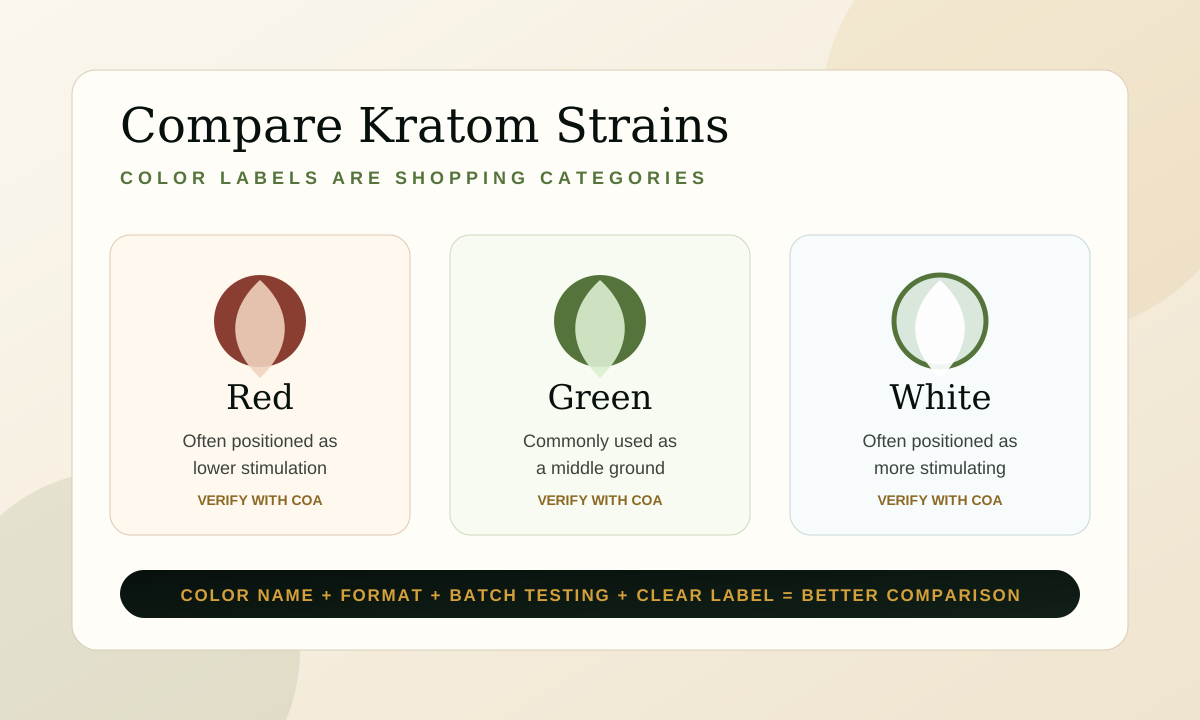
Strain guide
Compare by color, then verify by quality.
Use red, green, and white labels to narrow your search, then use lab testing, batch transparency, and product format to make the real decision.
What Research Says About Kratom Strains
The research picture is more careful than most strain charts online. A 2023 study on self-reported red, green, and white kratom strain differences found a consistent user-reported hierarchy: white strains were experienced as the most stimulating and energizing, green strains were in the middle, and red strains were less stimulating. That matches a lot of market language.
But the same study also reviewed certificates of analysis for the products used and did not find clear alkaloid differences that explained the color categories. The authors noted that user expectations, marketing, unmeasured plant compounds, or other factors could be part of the pattern. In plain English: people often report differences by color, but the label alone is not enough scientific proof.
More recent plant-science research adds another important layer. Postharvest handling, withering time, drying temperature, cultivar, genotype, season, and leaf maturity can all influence kratom powder color and alkaloid composition. One 2025 Frontiers study found that powder color can be shaped by processing conditions and does not necessarily correlate with alkaloid composition. A 2026 Frontiers study on Thai Mitragyna speciosa accessions found that leaf developmental stage had a stronger effect on alkaloid composition than accession or haplotype variation, and mature leaves with visible vein color differences still had largely consistent alkaloid profiles across the accessions studied.
That is why Phoria treats strain comparison as a quality and transparency conversation. Names matter, but third-party lab testing, batch transparency, responsible product descriptions, and clear internal categories matter more.
Bali, Borneo, Malay, Thai, Indo, And Maeng Da
Regional kratom names are some of the most searched strain terms. You will see products called Red Bali, Green Malay, White Borneo, Thai, Indo, Sumatra, and more. These names can be helpful for product organization, but they should be interpreted carefully.
In some cases, a regional name may reflect sourcing history, farm relationships, supplier tradition, or a product line that began with material from a region. In other cases, it may function more like a familiar style name. Unless a vendor provides traceability, do not assume the label proves exact origin, harvest location, or a unique chemical profile.

Maeng Da is also misunderstood. It is not a vein color. It is commonly used as a product-family or selection name, and it can appear in several color categories, including Red Maeng Da, Green Maeng Da, and White Maeng Da. The name by itself does not tell you the format, alkaloid profile, or batch quality.
For practical shopping, compare the full product identity: color, regional or family name, format, serving information, batch result access, and vendor quality standards. A clear quality standards page is more useful than a dramatic strain name with no transparency behind it.
Strain Vs Format: Do Not Mix Them Up
The old way to shop kratom often mixed strain and format into one conversation. They are different decisions.
- Strain: The product category or label, such as Red Bali, Green Maeng Da, White Borneo, or a Phoria color category.
- Format: How the kratom is prepared, such as powder, capsules, extract, gummies, or tablets.
A red powder and a red capsule may share a color category, but they can still differ in convenience, label instructions, serving consistency, product strength, and routine fit. Extracts and enhanced products require extra caution because concentration can vary more than plain-leaf formats.
Formats still matter
Strain tells you the category. Format tells you the experience of using it.
Compare powders, capsules, extracts, gummies, and tablets separately from red, green, and white strain labels.
How To Compare Kratom Strains Responsibly
A responsible kratom strain comparison should put quality controls ahead of dramatic promises. Use this checklist before choosing any kratom product:
- Check legality first: Kratom laws vary by state, county, city, and product type. Review the kratom legality guide before ordering.
- Look for lab-result access: Review lab results, certificates of analysis, or batch documentation when available.
- Compare the same format: Red powder vs green powder is a cleaner comparison than red powder vs green extract.
- Avoid disease-treatment claims: Responsible vendors should not claim kratom diagnoses, treats, cures, or prevents disease.
- Be cautious with strong products: Concentrated extracts and enhanced products are not the best comparison point for every adult shopper.
- Review public-health information: The FDA and NIDA both maintain kratom safety and research resources for consumers.
Kratom can have side effects and may interact with medications, alcohol, opioids, benzodiazepines, stimulants, antidepressants, sleep aids, and other substances. Reported adverse effects include nausea, constipation, dizziness, drowsiness, agitation, dependence, withdrawal, and more serious events in some cases. Do not use kratom while pregnant or nursing, and keep products away from children and pets.
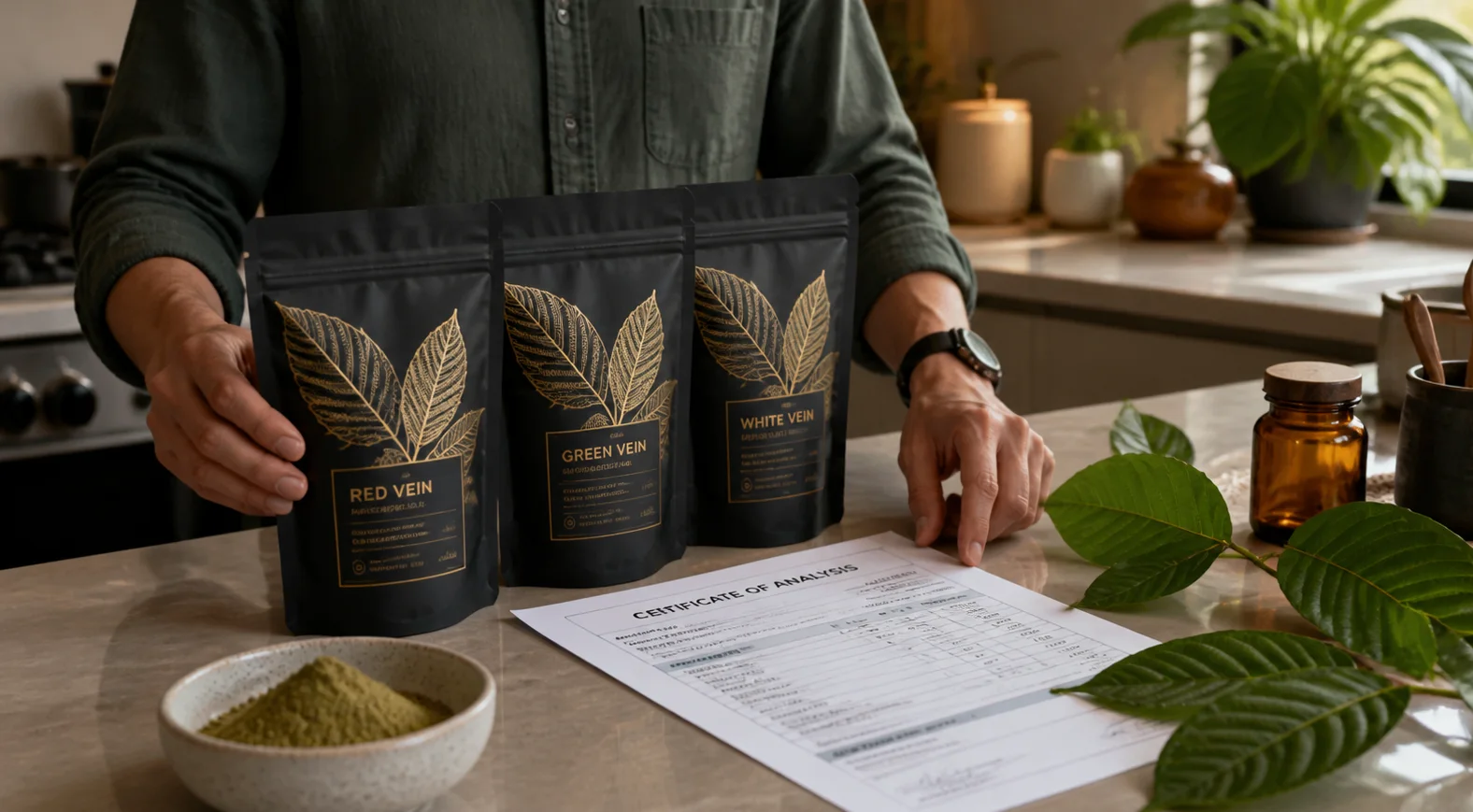
Shop Phoria Kratom Strains
If kratom is legal where you live and you have decided it fits your adult-use routine, compare Phoria products by color, format, and quality information. The product paths below are designed for shoppers who want clear categories instead of exaggerated strain claims.
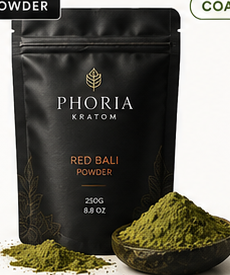 Red Vein Kratom
Compare red strain options commonly chosen by shoppers looking for a lower-stimulation category.
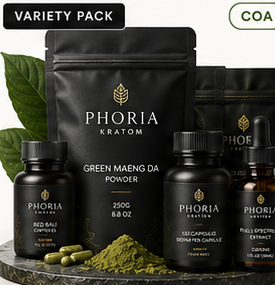 Green Vein Kratom
Browse the middle-ground color category many shoppers use as a balanced comparison point.
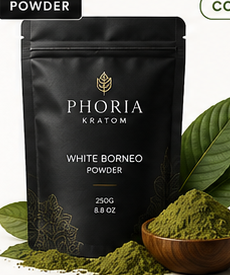 White Vein Kratom
Review white strain options often compared by shoppers interested in daytime-oriented categories.
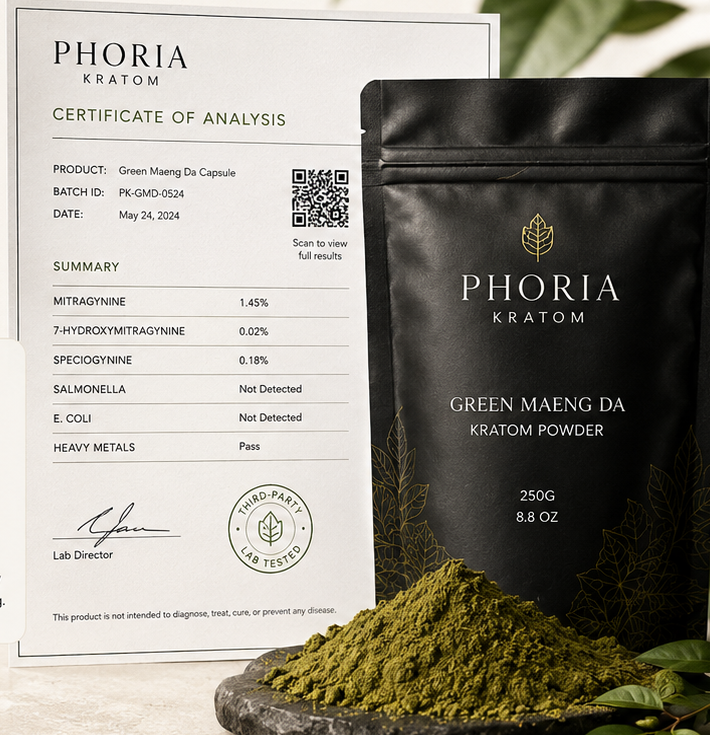 Best Sellers
Start with popular Phoria products and use quality information to compare before ordering.
Research Sources Used For This Guide
This page uses current public-health and plant-science sources to keep the strain comparison grounded. For deeper reading, review the 2023 user-reported strain study in PMC, the 2025 Frontiers paper on postharvest, genetic, and seasonal factors, the 2026 Frontiers paper on Thai Mitragyna speciosa accessions, the alkaloid profile study in Natural Product Communications, and current consumer-safety resources from the FDA and NIDA.
Compare Kratom Strains FAQs
What is a kratom strain?
A kratom strain is a commercial product label used to describe kratom by vein color, regional name, supplier selection, or blend style. It is useful for shopping, but it is not a guaranteed scientific category.
What is the difference between red, green, and white kratom?
Red kratom is commonly positioned as the least stimulating color category, white kratom is commonly positioned as the most stimulating, and green kratom is commonly positioned between the two. Research shows many users report that pattern, but lab testing does not always find clear alkaloid differences by color label.
Is Maeng Da a kratom color?
No. Maeng Da is usually used as a strain or product-family name, not a color. You may see Red Maeng Da, Green Maeng Da, White Maeng Da, or other Maeng Da products depending on the vendor.
Are Bali, Borneo, Malay, Thai, and Indo strains real origins?
Sometimes they may reflect a supply tradition or source region, but shoppers should not assume a regional name proves exact botanical origin. Batch records, lab results, and vendor transparency matter more than the name alone.
Does powder color prove how kratom will feel?
No. Current research suggests powder color can be strongly influenced by postharvest processing, drying, withering, and storage conditions. Color can be a shopping clue, but it is not proof of alkaloid content or effects.
Which kratom strain is best for beginners?
There is no universally best kratom strain. New adult shoppers should start by comparing lab-tested products, clear labels, legal availability, format, and their own sensitivity rather than chasing the strongest strain name.
Should I compare strains or formats first?
Compare both. Strain labels describe red, green, white, regional, or blend categories. Formats describe how the product is prepared, such as powder, capsules, extract, gummies, or tablets.
Why does lab testing matter when comparing strains?
Lab testing helps verify product quality signals that names cannot prove, including alkaloid information where available, contaminants, heavy metals, and batch documentation.
Final Thoughts
The best kratom strain comparison is honest about both sides of the issue. Red, green, white, Maeng Da, Bali, Borneo, Malay, Thai, and Indo labels can help shoppers organize choices. They can also create false confidence when they are treated as guarantees. Use strain names as a map, then use product quality, batch information, format, current laws, and responsible adult-use standards as the decision.
Ready to compare products? Browse Phoria kratom strains, shop best-selling kratom products, or review Phoria lab testing before you order.